
Double Your Outdoor Space: The Ultimate Guide to Under-Deck Drainage Systems

In the Pacific Northwest, we love our decks, but we often treat the space beneath them as a lost cause—a damp, dark area reserved for spiderwebs and forgotten lawn tools. But what if that space could be a dry, functional extension of your home?
An under-deck drainage system transforms the muddy void under your second-story deck into a usable, waterproof outdoor area.
What is an Under-Deck Drainage System?

Think of it as a secondary roof for your patio. These systems consist of a network of troughs and gutters installed underneath your deck boards and between the joists.
The Process: Water falls through the gaps in your decking, is caught by the drainage panels, and is funneled into a gutter system that carries it safely away from your house.
The Result: The area below remains 100% dry, even during a classic Washington all-day drizzle.
When choosing an under-deck system, the biggest decision isn't the color—it’s where the drainage sits. In the Pacific Northwest, this decision is the difference between a deck that lasts 15 years and one that lasts 40.
The "Under-the-Joist" Ceiling (Retrofit Style)
Systems like ZipUP are popular because they can be installed on an existing deck. They use panels that "zip" together beneath your deck’s framing. They are fairly easy to install and may seem like the best choice, but in my opinion these systems are not well-suited for our particular weather conditions. Here’s why:
The Risk: Water still drips through your deck boards and runs over your wood joists before hitting the ceiling that channels it to a gutter.
The "Greenhouse" Effect: In our humid climate, these systems can trap moisture against the wood. Without airflow, the wet joists "cook" in the summer and stay damp in the winter, creating a perfect environment for structural rot and mold.
The "Over-the-Joist" Trough (The Gold Standard)
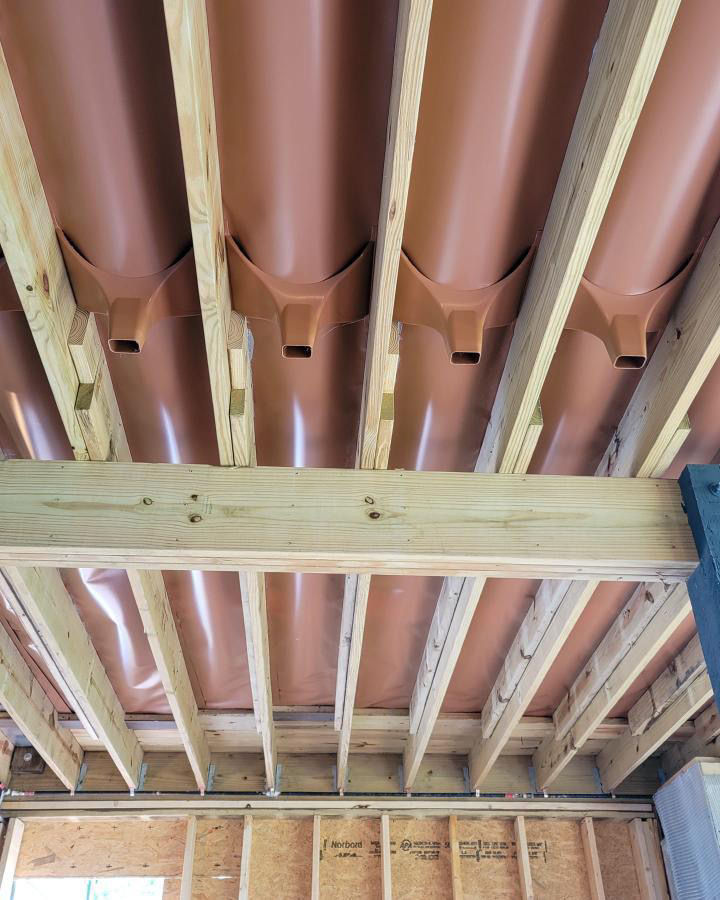
This is our preferred method at LaMoria Construction, using systems like Trex RainEscape. These flexible HDPE "troughs" are installed over the joists before the deck boards go down.
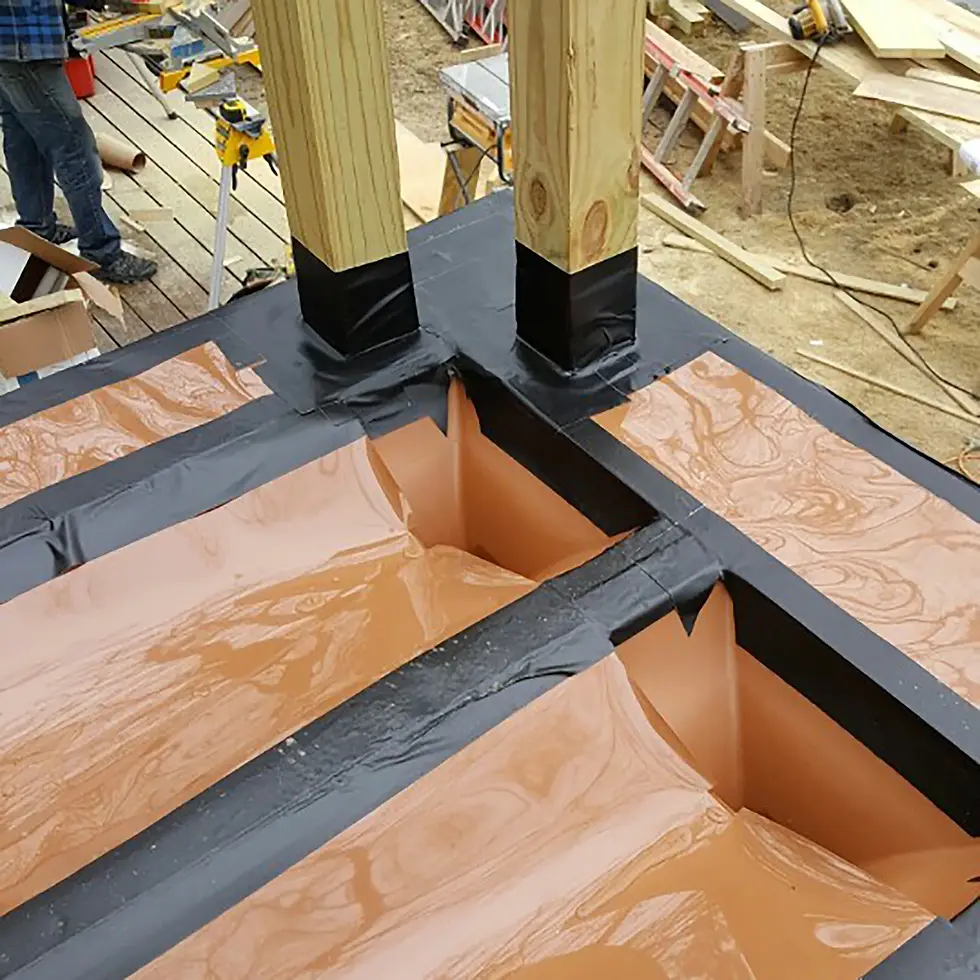
The Benefit: 100% protection. The water never even touches your structural lumber. It hits the trough and is funneled away immediately.
Why It Wins: By shielding the joists and beams from moisture, you are essentially "dry-docking" your deck's skeleton. This prevents the wood from ever getting wet, stopping rot before it starts.
You then have the flexibility to clad the ceiling in materials to compliment your existing structure.
The Benefits: More Than Just "Staying Dry"
Protects Your Structure: By diverting water away from your deck’s wooden joists and beams, you significantly reduce the risk of wood rot, mold, and structural decay.
Increases Home Value: You are effectively doubling your usable outdoor square footage without the massive cost of a full home addition.
All-Weather Enjoyment: It turns your backyard into a 365-day space. No more waiting out the precipitation to enjoy a morning coffee outside.
"What Can I Actually Do With the Space?"
Once the area is waterproof, the possibilities are limited only by your imagination. Here are a few ways our clients in Cowlitz, Lewis, and Clark counties are using their new "dry zones":

The Outdoor Living Room: Add a sectional, an outdoor rug, and ambient lighting. Because it’s waterproof, you can even install a TV and other electronics.
Additional Storage: Build an enclosed, "hidden" shed for expensive mountain bikes, kayaks, or garden and power tools that need to stay dry.
The Hot Tub Haven: A waterproof ceiling is perfect for a hot tub area, keeping the steam contained and the rain off your head while you soak.
An Alfresco Kitchen: Install a grill station and bar seating without worrying about the rain ruining your appliances.
The PNW Question: "How Do I Keep It Clean?"
This is the #1 concern for homeowners in our heavily wooded region. Between Douglas fir needles and maple leaves, debris happens. Here is how to ensure your drainage system doesn't turn into a compost bin.
When we install the deck boards over a drainage system, we try to maintain a consistent 3/16” gap between the boards. This allows enough water volume to wash the troughs clean during our heavy Washington rainstorms.
Maintenance & Cleaning Tips:
Annual Flushing: Most high-quality systems are designed so that small silt and grit simply wash through. Once or twice a year, we recommend taking a garden hose to the gaps in your deck boards to "flush" the troughs.
Gutter Maintenance: Just like your house, the under-deck system has a gutter. Ensure the downspout is clear of leaves so water doesn't back up into the troughs. We recommend using larger 3x4" downspouts for the system. This allows small debris to wash all the way through the pipes rather than getting stuck at the exit.
No-Scrub Design: Because the troughs are made of smooth, UV-resistant HDPE, most debris doesn't "stick." As long as the water is flowing, the system is largely self-cleaning.
The "Shingle Grit" Issue: If your deck is attached to a house with an asphalt roof, watch for shingle grit. It’s heavy and can settle in the troughs. A strong biannual flush with water usually clears this right out.
Pro-Tip for Homeowners: If you see water dripping from the front of your under-deck gutter, it’s a sign that your downspout is clogged with leaves. A 2-minute clear-out with a ladder is usually all it takes to get things moving again.

Is Your Deck a Candidate?
Most existing decks can be retrofitted with a drainage system, though it’s easiest to install during a new build or a "deck-over" (replacing the boards).
Ready to reclaim your backyard? At LaMoria Construction, we specialize in weatherproofing solutions that actually stand up to the Southwest Washington climate.
Contact us for a free at-home consultation.


Comments